
Gutters Overflowing in a Mountain Downpour: Quick Fixes
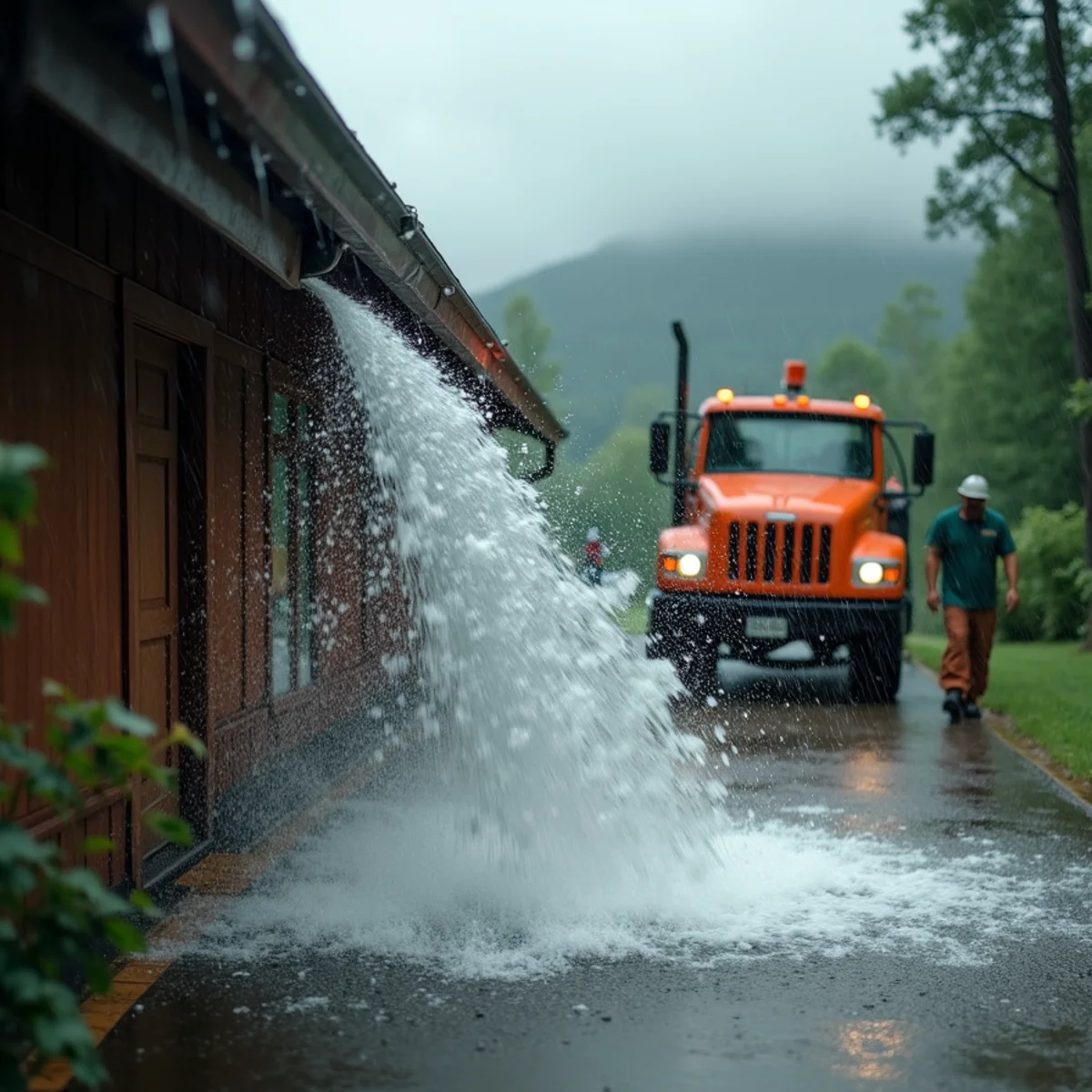
The Anatomy of a Mountain Cloudburst: Why High Country Rains Overwhelm Gutters
Summers in the North Carolina High Country bring dramatic weather extremes. Warm, moisture-laden air pushed up the eastern slopes of the Blue Ridge escarpment triggers explosive orographic thunderstorms. In towns like Boone, Blowing Rock, and Banner Elk, a peaceful afternoon can turn in minutes into a torrential cloudburst dropping 2 to 3 inches of rain in under 45 minutes.
When a wall of water strikes a mountain home, gutters that performed adequately during gentle spring showers suddenly fail catastrophically. Water cascades over the outer edge like Niagara Falls, hammering deck boards, washing away expensive mulch, and pooling directly against foundation footings. In the steep terrain of the High Country, overflowing gutters are not just an annoyance—they are a primary cause of hillside erosion, cracked retaining walls, and flooded crawl spaces.
At W.P.E.S. LLC, owner Wyatt Phelps and our specialized crew respond to dozens of overflow calls after every major summer storm. Understanding exactly why gutters overflow—and how to diagnose whether the problem stems from blockages, incorrect pitch, or simple hydraulic incapacity—is the key to protecting your mountain home.
Diagnosing the Overflow: Is It a Clog, Pitch Error, or Undersized System?
When gutters overflow during heavy rain, homeowners often assume leaves are to blame. However, in our field diagnostics across Avery and Watauga Counties, clogs account for less than half of all overflow emergencies. To pinpoint the real cause, observe your roofline during an active rainstorm:
1. Overflow at a Single Low Point (Incorrect Pitch): Gutters must slope gently toward downspouts at a rate of 1/4 inch per 10 feet of horizontal run. In older homes, settling foundations, warped fascia boards, or heavy winter snow loads cause gutters to sag in the center. If water pools and spills over midway between downspouts while the downspouts are only trickling, your gutter is back-pitched.
2. Overflow Directly Above Downspouts (Elbow Clog): If water waterfalls over the trough directly where the downspout connects, debris has choked the drop outlet or the upper elbow. In mountain forests, maple helicopters, oak tassels, and fir needles interlock into a dense plug right at the throat of the downspout drop.
3. Overflow Along the Entire Length (Hydraulic Overcapacity): If water is spilling evenly over the entire front lip of the gutter while downspouts are gushing at maximum volume, your gutter system is simply undersized for your roof area and pitch. Standard 5-inch residential gutters carry only 1.2 gallons per foot, which is easily overwhelmed by high-velocity runoff on steep 8/12 or 10/12 mountain roofs.
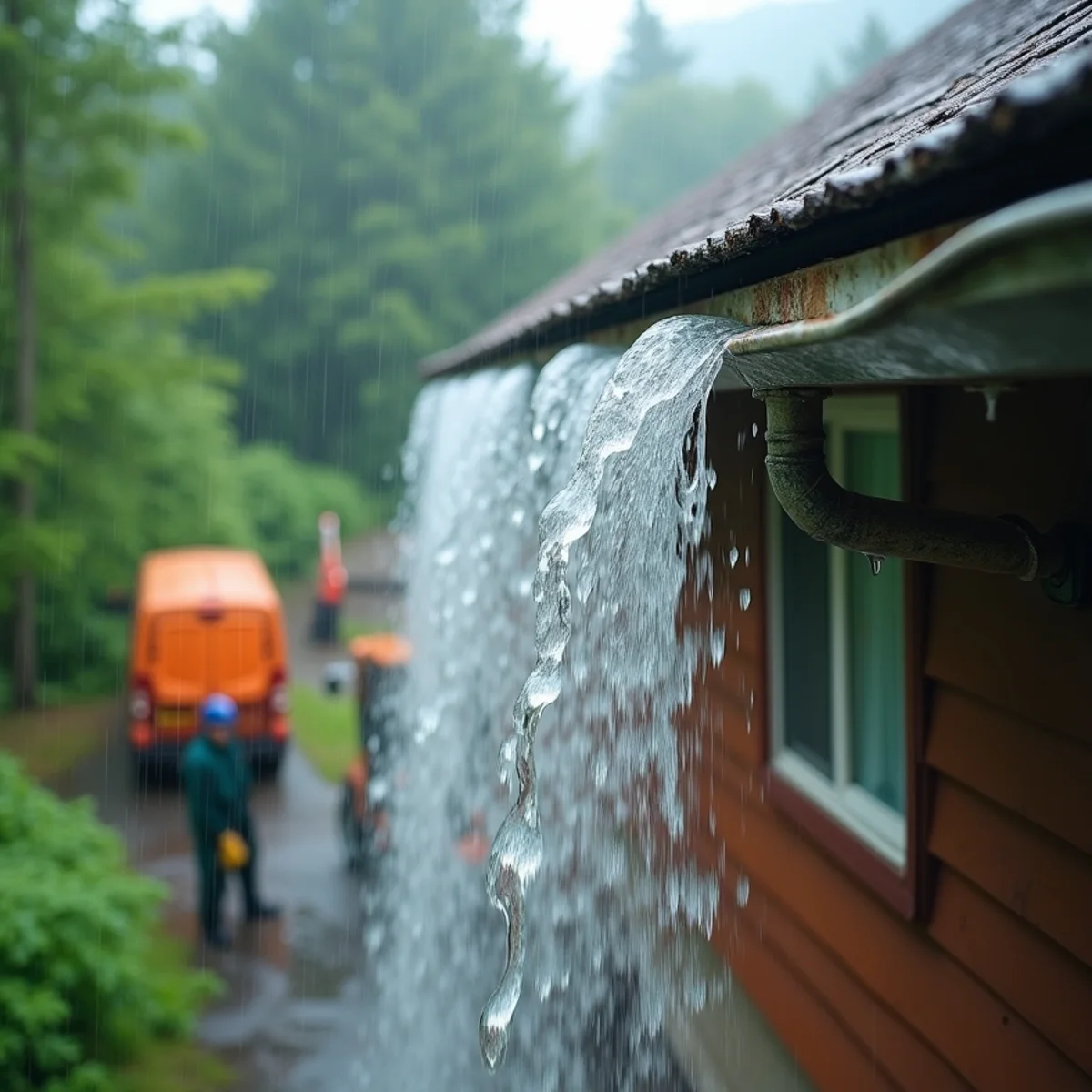
The Water-Over-The-Valley Problem: Roof Geometry and Splash Diverters
Mountain architecture is famous for dramatic rooflines: soaring gables, intersecting dormers, and deep timber-frame valleys. While aesthetically stunning, roof valleys act as natural hydrological funnels, collecting runoff from two massive roof planes and concentrating it into a single high-speed torrent.
During a cloudburst, water rushing down an 18-foot metal roof valley develops tremendous kinetic energy. When it reaches the eave, the sheer momentum of the water causes it to shoot clean over the top of a standard 5-inch gutter, bypassing the trough entirely and digging a trench in the landscape below.
To solve this valley overshoot problem, W.P.E.S. LLC installs custom high-flow aluminum splash diverters (also known as valley splash guards). Formed from heavy-gauge aluminum matched to your gutter's finish, these 4-inch vertical baffles are fastened securely along the outer lip of the gutter at the valley junction. The diverter deflects the high-velocity stream downward, forcing all runoff into the trough where oversized 3x4-inch commercial downspouts can safely evacuate it.
Emergency Triage in Active Rain: Safe Interventions from the Ground
If you are standing on your porch watching gutters overflow right now, prioritize safety above all else. Never climb an aluminum extension ladder on wet, sloped, or muddy mountain ground during an active thunderstorm or lightning storm.
Here are safe, effective emergency actions you can take from ground level: - Tap Lower Downspout Elbows: Many downspout clogs occur at the bottom elbow where the vertical pipe transitions into a horizontal splash block or underground adapter. Use a broom handle or rubber mallet to gently tap the elbow; this vibration often dislodges compacted twigs and restores flow. - Remove Clogged Splash Block Grates: If downspouts discharge into ground-level basin grates or flexible plastic extenders choked with washed mulch, kick the debris clear to allow water to exit freely. - Divert Foundation Puddles: If water cascading off the eave is pooling against your foundation wall or threatening a crawl space vent, use a garden shovel to dig a temporary shallow trench guiding the water downhill and away from structural walls. - Take Diagnostic Video: Record a 30-second video on your phone showing where the water is overflowing. This provides invaluable data for Wyatt Phelps when inspecting your roofline under dry conditions.

Permanent Solutions: 6-Inch Seamless Retrofits, Oversized Downspouts, and Micro-Mesh
Band-aid fixes cannot overcome basic physical limitations. To permanently eliminate gutter overflow on High Country properties, W.P.E.S. LLC implements three engineered upgrades:
1. Custom 6-Inch Seamless K-Style Gutters: Replacing outdated 5-inch sectional troughs with continuous 6-inch seamless aluminum gutters increases water capacity by over 40%. The wider 6-inch opening easily captures fast-moving runoff coming off steep pitches without overshoot, while continuous on-site roll-forming eliminates leaky seams.
2. Oversized 3x4-Inch Commercial Downspouts: Standard residential gutters use tiny 2x3-inch downspouts that easily choke on a single leaf cluster. We install 3x4-inch commercial downspouts with more than double the cross-sectional evacuation area, moving up to 450 gallons per minute.
3. Surgical 304 Stainless Steel Micro-Mesh Guards: Even the largest gutter will overflow if it is filled with wet pine needles and oak leaves. Our surgical micro-mesh guards block all organic debris while pulling torrential rainwater straight into the trough via capillary action, ensuring 100% flow capacity during cloudbursts.
Homeowner Prevention Checklist: Ensuring Zero Spills in the Next Storm
Prepare your mountain home for the next severe weather front with this practical pre-storm checklist:
- Inspect Downspout Outlets Before Rain: Clear grass clippings, landscape mulch, and leaves away from the bottom of all downspouts and pop-up emitters. - Check Gutter Alignment After Winter: Inspect the slope line along long fascia runs. If winter ice has bowed a section downward, have hangers adjusted to restore proper pitch. - Install Valley Splash Diverters: Ensure all high-volume roof valleys have tall aluminum splash shields installed to prevent high-velocity water from overshooting the trough. - Trim Overhanging Tree Branches: Keep tree canopies trimmed back at least 6 to 10 feet from roof edges to reduce leaf drops and prevent branch strikes during high winds. - Schedule a Professional Roofline Evaluation: Call Wyatt Phelps at W.P.E.S. LLC at (321) 485-9911 for expert gutter capacity assessments and permanent water management in Avery and Watauga Counties.
Wyatt Phelps
OwnerWyatt Phelps founded W.P.E.S. LLC in 2020 in Elk Park, NC. Serving homeowners and property managers throughout Avery, Watauga, and the Blue Ridge mountains with continuous seamless gutters, micro-mesh guards, and slope drainage.
Call Wyatt Directly: (321) 485-9911Common Questions
Frequently Asked Questions
Clear, practical answers about High Country gutters, snow loads, leaf guards, and exterior drainage.
If gutters are clean but still overflow during heavy downpours, the cause is typically undersized 5-inch capacity, insufficient downspout volume (tiny 2x3-inch drops), or water overshooting steep roof valleys that lack splash diverters.