
Water in the Crawlspace After Rain? Check Your Downspouts
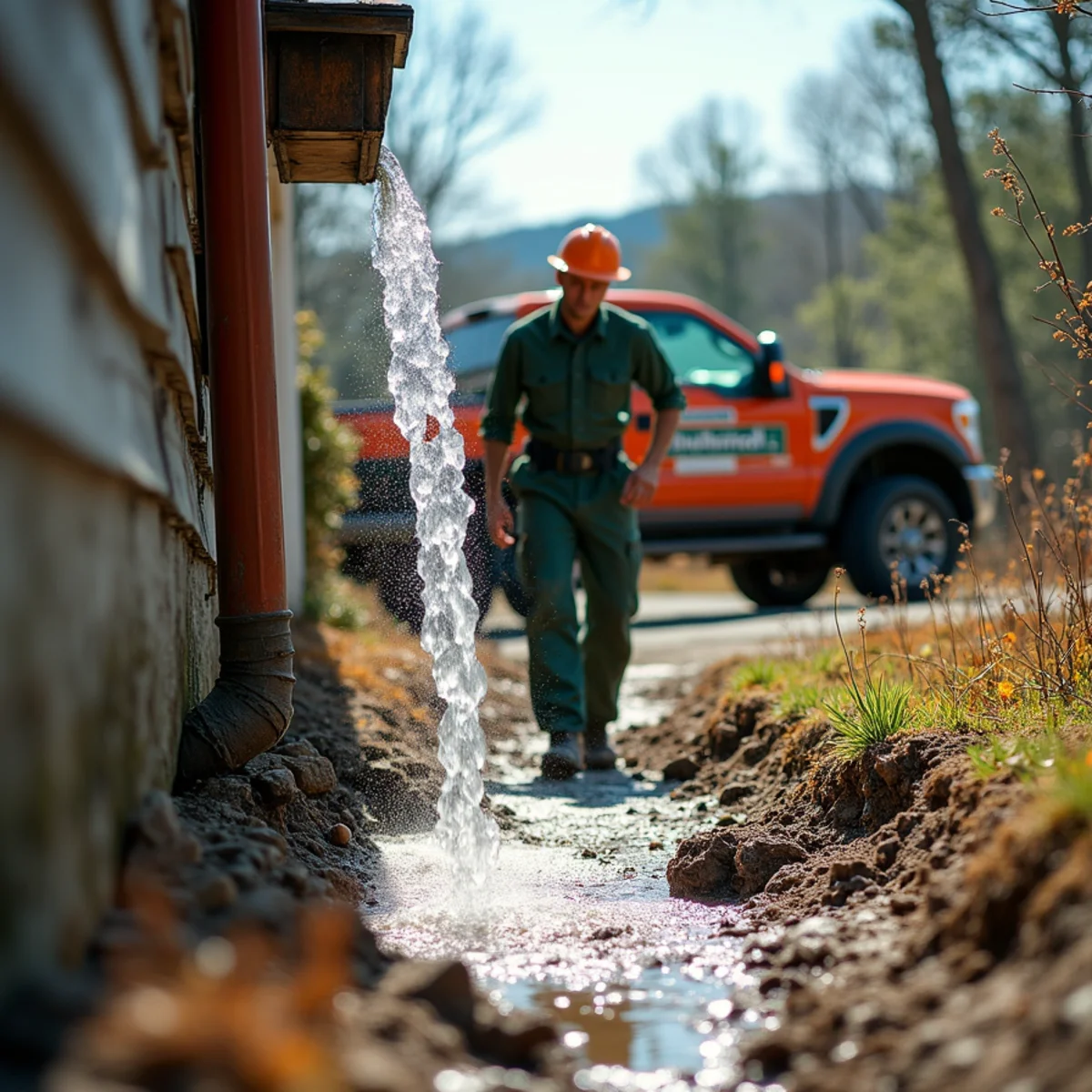
The Direct Connection: How Roof Runoff Ends Up Beneath Your Subfloor
Opening a crawl space access door to find standing puddles, dripping subfloor insulation, and muddy soil after a mountain storm is an alarming discovery. Homeowners often assume an underground spring suddenly surfaced or that groundwater naturally rises through the earth. In over 85% of the crawl space moisture inspections performed by W.P.E.S. LLC across Avery, Watauga, and Mitchell Counties, the true culprit is dumping directly overhead: your roof downspouts.
Consider the raw hydrology: a standard 2,000-square-foot mountain roof collects approximately 1,250 gallons of water for every single inch of rainfall. During a routine 3-inch mountain storm, that roof intercepts 3,750 gallons of stormwater. If that water discharges through four standard downspouts equipped with simple 2-foot plastic splash blocks, you are dumping nearly 1,000 gallons of concentrated water directly beside your foundation at four pinpoint locations.
In Western North Carolina, where mountain soils consist of dense red clay capped with porous loam, surface water quickly percolates downward until it hits impermeable clay strata. The water then follows the path of least resistance—flowing through the loose backfill soil surrounding your foundation wall and seeping directly through porous concrete masonry blocks into your crawl space.
Signs of Crawlspace Moisture: Musty Odors, Cupping Hardwoods, and Foundation Cracks
Crawl space water rarely stays confined beneath your home. Because of the 'stack effect' (the natural chimney-like movement of warm air rising through a house), up to 50% of the air you breathe on your main living floor originates in the crawl space. When water collects below, it triggers a cascade of interior and structural symptoms:
1. Persistent Musty Odors & High Indoor Humidity: Damp dirt and standing puddles foster colonies of wood-decay fungi and mold. Airborne spores and musty odors drift upward through subfloor penetrations, degrading indoor air quality and triggering allergies.
2. Cupping and Buckling Hardwood Flooring: As moisture evaporates from the crawl space soil, it is absorbed by the unfinished underside of your oak, maple, or pine subfloor. The bottom of the wood swells while the conditioned top surface remains dry, forcing the edges of floorboards to curl upward into concave 'cups.'
3. Sagging Fiberglass Batts & Wood Rot: Wet insulation loses all thermal R-value. Soaked fiberglass batts become heavy and pull away from floor joists, hanging like wet rags while moisture rots the wooden sill plates, band joists, and subfloor framing.
4. Foundation Masonry Cracks & Efflorescence: As moisture migrates through concrete block foundation walls, it leaves powdery white mineral deposits called efflorescence. Persistent hydrostatic pressure can crack mortar joints and bow foundation walls inward.
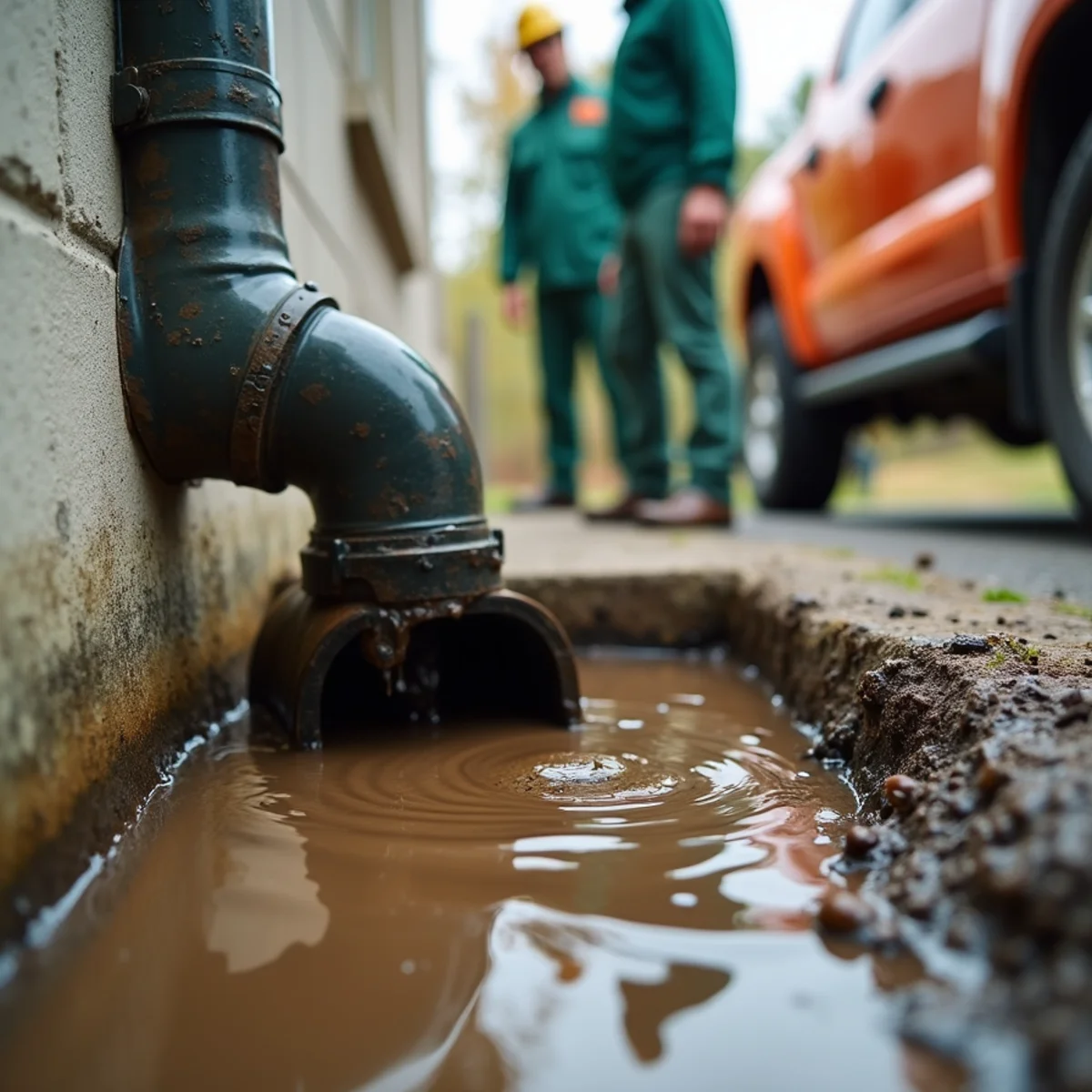
The Problem with Short Downspout Extensions on Steep Mountain Lots
Many homeowners attempt to solve crawl space dampness by attaching cheap, flexible plastic accordion extensions to the bottoms of their downspouts. While well-intentioned, these short 3-to-4-foot extenders fail routinely in mountain environments.
First, a 4-foot extension simply deposits water into the active backfill zone. When a home is built on a sloped mountain lot, contractors excavate into the hillside, pour the foundation, and backfill around the walls with loose soil. This backfill soil remains more porous than virgin mountain ground for decades. Discharging water 4 feet from the wall allows it to sink straight down the backfill trench and enter through the foundation footing.
Second, flexible extenders present serious maintenance headaches: lawn mowers crush them, heavy snow slides bury and flatten them, and autumn leaves snag on the internal corrugated ribs, creating stubborn clogs that cause the downspout to burst at the seams. On steep slopes, short extensions often discharge water right onto unpaved dirt, carving deep erosion gullies that undermine driveways and footings.
Hydrostatic Pressure and Soil Saturation: Why Splash Blocks Fail
Standard concrete or plastic splash blocks are completely useless during High Country storms. A splash block is designed merely to prevent soil gouging immediately beneath the downspout elbow; it does nothing to move water outside the structural zone of influence.
When thousands of gallons of stormwater pour onto a 24-inch splash block, the water immediately overflows the sides, saturating the topsoil. As water accumulates in the ground, it creates hydrostatic pressure—a physical force exerted by standing water against the exterior of your foundation wall. Water weighs approximately 62.4 pounds per cubic foot. When saturated soil presses against an 8-foot basement or crawl space wall, it exerts thousands of pounds of lateral pressure.
Concrete block masonry is naturally porous. Hydrostatic pressure forces liquid water through microscopic fissures and mortar seams. No amount of interior waterproofing paint or plastic vapor barrier can stop hydrostatic water once it pools against the exterior wall. The only permanent solution is to intercept roof water before it touches the soil and convey it far away via below-grade piping.

Engineered Drainage Fixes: Below-Grade Smooth PVC, Cleanouts, and Pop-Up Emitters
At W.P.E.S. LLC, our specialized drainage division engineers permanent, below-grade stormwater systems that completely isolate roof runoff from your foundation. We reject flimsy, perforated black corrugated pipe that crushes under soil weight and fills with silt. Instead, we build commercial-grade networks using rigid Schedule 40 or SDR 35 PVC pipe.
Our system architecture includes four key components: 1. Direct Downspout Adapters: We tie each 3x4-inch commercial downspout directly into a rigid PVC vertical intake boot, sealing the connection to prevent splashover and weed entry. 2. In-Line Cleanout Assemblies: We install threaded access cleanouts at the base of every downspout line. This allows easy access with a garden hose or drain snake to flush away roof grit without excavating pipe. 3. Continuous Downhill Pitch: We trench rigid PVC pipe beneath lawn turf lines at a minimum slope of 1/8 to 1/4 inch per foot, bypassing the foundation backfill zone entirely. 4. Self-Closing Pop-Up Emitters: Conduits daylight 15 to 40 feet downhill from the home, discharging through spring-loaded pop-up bubbler valves. When water flows, hydrostatic pressure lifts the lid to release runoff onto a stabilized gravel rip-rap pad. When rain stops, the lid snaps shut, preventing leaves, rodents, and snakes from entering the pipe.
Homeowner Moisture Elimination Checklist: Step-by-Step Crawlspace Protection
Take control of your home's foundation health with this practical moisture elimination checklist:
- Inspect Crawlspace Within 24 Hours of Heavy Rain: Shine a high-powered flashlight into your crawl space after a downpour. Note exactly where standing water or damp soil appears relative to exterior downspouts. - Verify Downspout Discharge Distance: Ensure all downspouts terminate at least 10 to 15 feet downhill from your foundation wall. If downspouts dump closer, install temporary extensions immediately. - Keep Gutter Troughs Free-Flowing: Overflowing gutters dump water directly along the foundation drip line. Install 6-inch seamless gutters and micro-mesh leaf filters to prevent trough spillage. - Check Ground Slope Around Foundation: Grade should slope away from your foundation at a minimum pitch of 6 inches over the first 10 feet to shed surface water. - Schedule an Engineered Drainage Assessment: Call Wyatt Phelps at W.P.E.S. LLC at (321) 485-9911 for custom rigid PVC underground downspout routing in Avery, Watauga, and Mitchell Counties.
Wyatt Phelps
OwnerWyatt Phelps founded W.P.E.S. LLC in 2020 in Elk Park, NC. Serving homeowners and property managers throughout Avery, Watauga, and the Blue Ridge mountains with continuous seamless gutters, micro-mesh guards, and slope drainage.
Call Wyatt Directly: (321) 485-9911Common Questions
Frequently Asked Questions
Clear, practical answers about High Country gutters, snow loads, leaf guards, and exterior drainage.
Even on sloped lots, water dumping from downspouts enters the porous backfill soil surrounding foundation walls. Hydrostatic pressure forces this saturated groundwater through masonry joints and footings into the crawl space, regardless of the yard's surface slope.