
5-Inch vs 6-Inch Gutters for Mountain Rainfall

The Sizing Debate: Why Gutter Width Matters More in the High Country
When replacing gutters or building a new home in Western North Carolina, one of the most consequential decisions you will make is selecting between 5-inch and 6-inch K-style seamless gutters. In traditional suburban flatland developments, 5-inch gutters have been the default residential standard for decades. However, across the rugged terrain of Avery, Watauga, and Mitchell Counties, where elevations climb above 3,500 feet and weather patterns produce violent orographic cloudbursts, relying on flatland sizing standards routinely results in overflowing eaves and foundation water damage.
At W.P.E.S. LLC, owner Wyatt Phelps installs both 5-inch and 6-inch continuous seamless aluminum systems. While 5-inch gutters still serve specific architectural applications, the vast majority of High Country mountain homes require the enhanced hydraulic performance of 6-inch systems.
This in-depth guide compares volumetric capacities, water velocity dynamics, downspout compatibility, and architectural aesthetics to help you make an informed investment for your mountain property.
Volumetric Capacity Comparison: 5-Inch vs. 6-Inch Hydraulic Flow Data
At first glance, the difference between a 5-inch and a 6-inch gutter sounds minimal—just a single inch. In fluid mechanics, however, that single inch creates an enormous difference in volumetric cross-section and flow capacity.
Consider the engineering specifications: - 5-Inch K-Style Gutter: Measures 5 inches across the top opening, 3.25 inches in depth, with a 3-inch bottom floor. It holds approximately 1.2 gallons of water per linear foot. A 40-foot run holds roughly 48 gallons at maximum capacity. - 6-Inch K-Style Gutter: Measures 6 inches across the top opening, 4 inches in depth, with a 3.5-inch bottom floor. It holds approximately 2.0 gallons of water per linear foot. A 40-foot run holds 80 gallons at maximum capacity.
That represents a massive 66% increase in total liquid storage volume and over a 40% increase in active flow evacuation rate! During an intense summer mountain thunderstorm dropping 2 to 3 inches of rain per hour, a 6-inch gutter handles the sudden deluge without backing up or splashing over the front lip.
Downspout Pairing: 2x3-Inch vs. 3x4-Inch Commercial Outlets
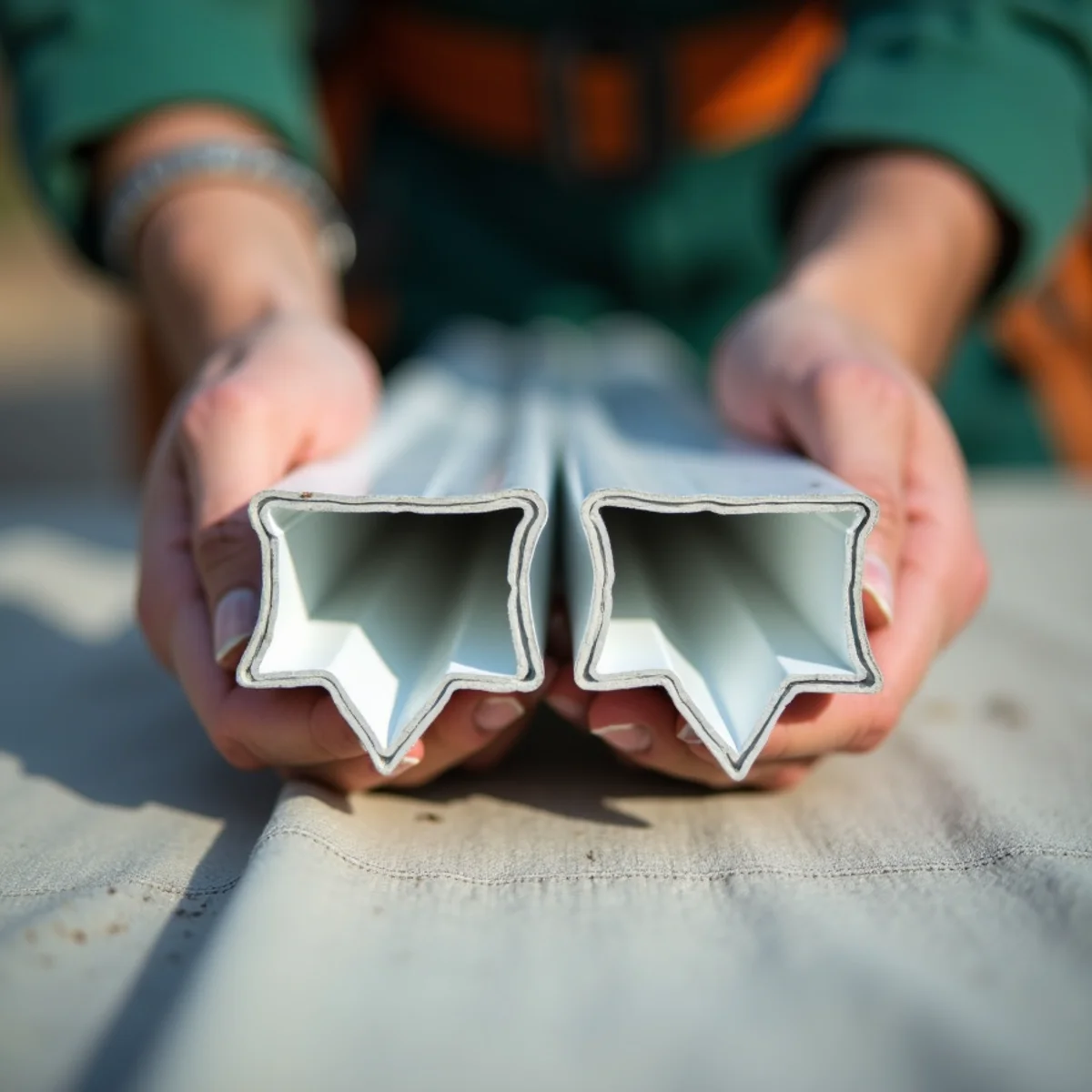
A gutter trough is only as effective as the vertical drop outlets evacuating it. The true performance disparity between 5-inch and 6-inch systems becomes most apparent when you examine their matching downspout configurations.
1. Standard 5-Inch System (2x3 Downspouts): Traditional 5-inch gutters are paired with standard 2x3-inch corrugated rectangular downspouts. A 2x3 downspout provides only 6 square inches of cross-sectional area. It can drain approximately 20 to 25 gallons per minute. In mountain forests, a single cluster of wet oak leaves, rhododendron twigs, or hemlock needles can completely bridge the 2-inch throat, causing the entire trough to overflow.
2. Commercial 6-Inch System (3x4 Downspouts): 6-inch gutters accommodate commercial-grade 3x4-inch downspouts, providing 12 square inches of cross-sectional drainage area—exactly double the capacity of a 2x3 downspout. A 3x4 downspout evacuates up to 450 gallons per minute. Large autumn leaves, pine cones, and shingle grit wash through smoothly without bottlenecking, drastically reducing seasonal clog emergencies.
Roof Pitch and Material Dynamics: Asphalt Shingles vs. Standing-Seam Metal
Why does roof design dictate gutter width? In the Blue Ridge Mountains, homes feature unique roof geometries that accelerate water velocity beyond suburban norms:
- Pitch Multipliers: Steep 8/12, 10/12, and 12/12 mountain rooflines accelerate runoff. Water hits the bottom eave with high kinetic energy. A narrow 5-inch opening frequently allows water to overshoot the trough entirely, especially on standing-seam metal roofs where friction is minimal. A 6-inch gutter provides an extra inch of forward catchment reach, capturing high-velocity streams cleanly. - Valley Concentration: Roof valleys where two steep slopes meet concentrate massive volumes of stormwater into a single stream. A 5-inch gutter is easily overwhelmed at valley terminals, whereas a 6-inch gutter—especially when paired with an aluminum splash diverter—absorbs the torrent without spillage. - Heavy Snow Slabs: On metal roofs, sliding snowpacks exert tremendous downward drag. 6-inch seamless gutters extruded from heavy-duty .032-gauge aluminum and secured with internal screw hangers every 18 to 24 inches offer far greater structural rigidity against snow slides than thin .027 5-inch gutters.

When Is a 5-Inch Gutter Still Acceptable on Mountain Properties?
Despite the clear hydraulic advantages of 6-inch gutters, there are specific scenarios where 5-inch seamless gutters remain an acceptable, cost-effective choice in Western North Carolina:
1. Small Accessory Buildings: Detached one-car garages, garden sheds, woodsheds, and small workshops with compact roof surface areas (under 600 square feet) produce low water volume that 5-inch troughs handle easily without risk of overtopping. 2. Shallow-Pitch Ranch Cabins: Single-story homes with simple gable rooflines and low pitches (4/12 or lower) where water moves at moderate speed and roof surface area is modest. 3. Tight Fascia Profiles & Historical Details: Historic cottages or structures with ornate architectural rafter tails, exposed crown moldings, or narrow frieze boards where a 6-inch trough might visually crowd architectural trim or window casings. 4. Budget-Restrained Outbuildings: For agricultural barns, equipment sheds, or covered woodpiles where secondary spillage causes minimal soil or foundation consequence, 5-inch gutters provide a basic level of water redirection.
However, for any multi-story mountain residence, home with standing-seam metal roofing, structures with roof valleys or dormers, or properties surrounded by mature white pine, hemlock, and red oak forest canopy, W.P.E.S. LLC strongly advises 6-inch seamless aluminum.
Cost-Benefit Breakdown: Investment Differences and Long-Term Value
When evaluating your project budget, upgrading from 5-inch to 6-inch seamless gutters represents one of the highest-ROI investments you can make in home protection.
- Upfront Cost Difference: In 2026, 6-inch seamless aluminum gutters typically cost only $2.00 to $3.50 more per linear foot than 5-inch gutters. On a typical 160-linear-foot mountain installation, the total price difference is often less than $400 to $550. - Heavy-Gauge Durability: Our 6-inch gutters are custom roll-formed on-site using heavy-duty .032-gauge aluminum coil, whereas standard 5-inch gutters often use thinner .027 aluminum. That thicker metal wall provides 18% greater tensile strength against crushing snowpack and ladder pressure. - High-Flow Downspout Synergy: 6-inch gutters accommodate commercial 3x4-inch downspouts without awkward transition reducers. A 3x4 downspout handles more than double the water rate of a 2x3 downspout, virtually eliminating drop clogs. - Avoided Repairs: That modest upfront investment permanently protects your home against costly secondary water damage: $2,500+ for foundation waterproofing, $1,200+ for rotted fascia replacement, and thousands of dollars in landscaping soil restoration. - Resale Appeal: Prospective mountain home buyers and home inspectors actively look for 6-inch gutters and oversized downspouts as evidence of quality exterior craftsmanship.
Contact Wyatt Phelps at W.P.E.S. LLC at (321) 485-9911 today for an honest, on-site roofline evaluation and personalized sizing recommendation in Avery, Watauga, or Mitchell County.
Wyatt Phelps
OwnerWyatt Phelps founded W.P.E.S. LLC in 2020 in Elk Park, NC. Serving homeowners and property managers throughout Avery, Watauga, and the Blue Ridge mountains with continuous seamless gutters, micro-mesh guards, and slope drainage.
Call Wyatt Directly: (321) 485-9911Common Questions
Frequently Asked Questions
Clear, practical answers about High Country gutters, snow loads, leaf guards, and exterior drainage.
A 6-inch K-style gutter holds approximately 2.0 gallons of water per linear foot compared to 1.2 gallons for a 5-inch gutter. This represents a 66% increase in water-holding capacity and over 40% greater flow rate.